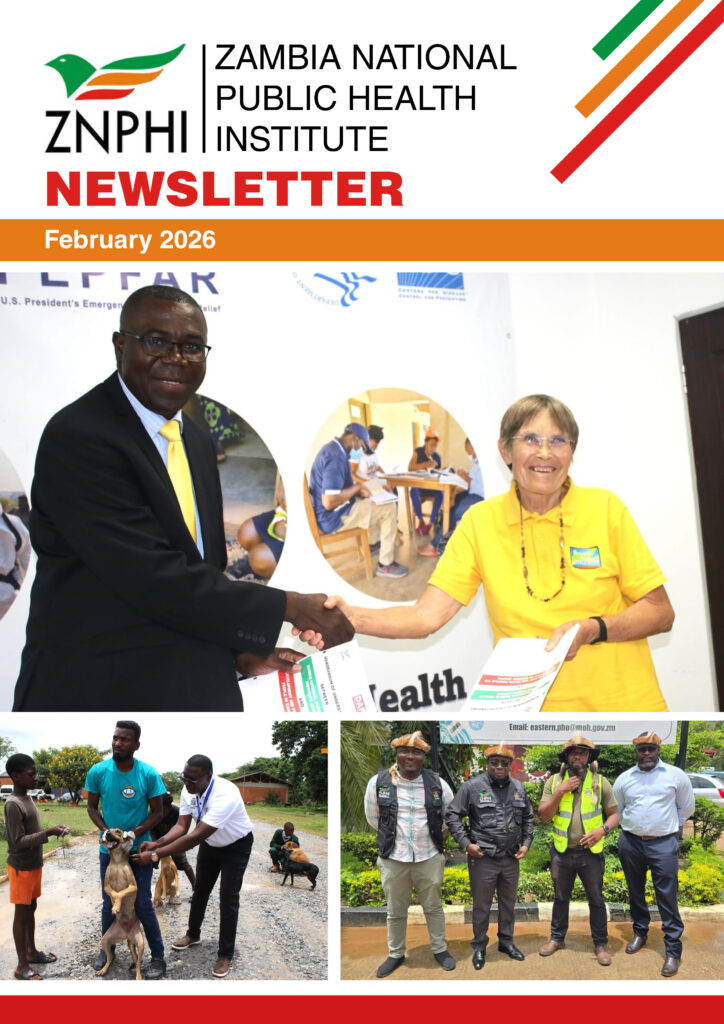
FEBRUARY 2026 NEWSLETTER
FEBRUARY 2026 NEWSLETTER Read More »
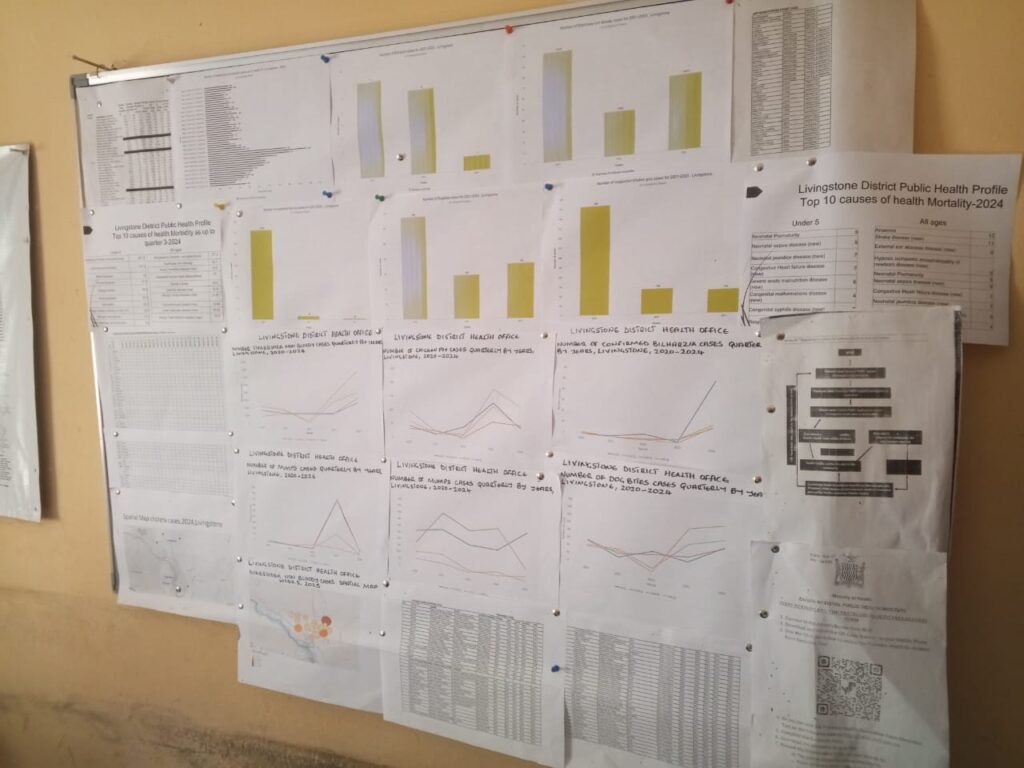
Summary The challenge: District Surveillance officers needed to manually review data to spot whether or not the number of reported cases surpassed a threshold in disease cases, slowing down detection and putting lives at risk. The solution: In partnership with Resolve to Save Lives, the Zambia National Public Health Institute created a threshold-based alert system to automatically flag unusual increases in disease cases and prompt timely investigation. The impact: The alert system processes data faster and more accurately than manual review, allowing health authorities to find outbreaks faster and stop them sooner. District Surveillance officers needed to manually review data to spot whether or not the number of reported cases surpassed a threshold in disease cases, slowing down detection and putting lives at risk. How can officials spot early warning signs to stop outbreaks before they spiral into crises? To prevent isolated disease cases from spiraling into larger outbreaks or epidemics, speed is essential. The Zambia National Public Health Institute (ZNPHI) has long collected weekly data on 34 priority diseases but has until now lacked a way to quickly analyze the large volume of information provided by health facilities across the country. This had also limited Zambia’s ability to fully implement collaborative surveillance, which emphasizes timely and integrated data use across the surveillance system. A major cholera outbreak in 2023 was one of the most severe in the country’s history, which eventually reached over 20,000 cases and demonstrated the need for faster and more reliable use of surveillance data for early warning and response. In hindsight, ZNPHI noticed that this outbreak was preceded by an unusual rise in suspected cases of non-bloody diarrhea—a known proxy for cholera—but without timely analytical tools, authorities were unable to identify these early warning signs or launch preventive actions that might have reduced the scale of the outbreak. The solution: A threshold-based alert system The Zambia National Public Health Institute (ZNPHI) partnered with Resolve to Save Lives (RTSL) to create a threshold-based alert system to analyze weekly disease data and automatically scan for anomalies. Once the number of disease cases surpasses a predefined threshold, it sends an alert to the affected district’s surveillance office, prompting a rapid investigation to determine whether an outbreak may be emerging. The team rolled out the tracker to 26 districts and tested it out from January through December 2025. “The threshold-based alert system is part of Zambia’s implementation of collaborative surveillance, a strategy that aims to strengthen public health security by integrating data and promoting information exchange at all levels and across sectors” says Dr. Cephas Sialubanje, Director of Strategic Planning and Information Management and Collaborative Surveillance lead at ZNPHI. Setting the correct thresholds Determining the right thresholds for the tracker was critical to success. For high-risk, highly transmissible diseases like Ebola, anthrax or yellow fever, just one suspected case is enough to trigger an alert. For others, like cholera or COVID-19, the threshold is less clear. “There are some conditions where the historical threshold was just an ‘unusual increase’ in cases. So we had to define what that unusual increase should be,” says Steven Nonde at ZNPHI, who helped design the threshold-based alert system. To standardize these thresholds, the team applied two simple rules: an alert is triggered when the caseload doubles over two consecutive weeks or increases one and half times over three weeks. They were then reviewed with district and provincial health officers, who assessed whether the triggers made sense given local disease patterns, and helped validate that they were appropriate for use in their settings. While the thresholds “aren’t foolproof,” Nonde notes, “the purpose is to get surveillance officers to closely interrogate their data. And it’s achieving that.” To accompany the tool, the team at ZNPHI also conducted trainings with district surveillance officers to make sure they’re confident using the tool and engaged with senior leadership to secure buy-in and the resources needed for implementation.” The impact: More High Quality Alerts Through November 2025, the tool generated 546 alerts across the 26 districts, which ultimately helped to detect 232 events that were investigated and acted on early—interventions that likely prevented outbreaks from taking hold. In Kabwe province, the tool repeatedly flagged increases in cases of non-bloody diarrhea. Each alert was followed by a rise in confirmed cholera cases, demonstrating the system’s ability to predict potential outbreaks. Because alerts were issued early, ZNPHI and district-level teams were able to implement preventive actions, like notifying residents and distributing chlorine to reduce transmission, before caseloads grew out of control. The system has also improved data quality. Manual threshold calculations and data review are prone to error, especially when analysts are processing huge volumes of information. By automating these calculations and alerts, the system also frees up valuable staff time, allowing public health intelligence officers to focus on verifying alerts and coordinating with district offices rather than processing raw data. The system has also improved visibility of district level events that previously might not have been escalated to ZNPHI, strengthening information flow and integration across different levels of the country’s health system. As a result, the ZNPHI PHEOC now triages all district level events on ZEBRA, its emergency management system, to determine and coordinate the appropriate level of response activities. Given this initial success, the team has now expanded the program to an additional 44 districts and intends to reach nationwide coverage in 2026. Health authorities across the region, including the Ethiopian Public Health Institute, are learning from this success and considering adopting a similar program. “Zambia has shown that even a simple, well-designed alert system can transform how quickly countries detect and respond to public health threats,” says Sooyoung Kim, Senior Technical Advisor at Resolve to Save Lives. “The impact we’re seeing so far—faster investigations and better use of data—is exactly what many countries in the region are striving for. Other countries are now looking at Zambia’s experience as a blueprint for how to modernize their own systems, and that kind of regional learning is exactly what collaborative surveillance is

We firmly endorse Tobacco Bill No. 10 of 2022, and here is why.As your institute mandated to address public health security in the country, we cannot keep quiet on tobacco. This proposed Bill amendment brings us close to protecting our communities’ well-being and a critical step toward preserving public health. Tobacco use is still one of the biggest preventable, and indeed totally avoidable causes of mortality and disease on the globe. The World Health Organization (WHO) estimates that tobacco use causes over 8 million fatalities yearly, of which over 7 million are directly related to tobacco use and over 1.2 million are caused by secondhand smoke exposure for non-smokers. Tobacco-related ailments have a detrimental effect on Zambia’s already precarious healthcare system and economy. While there are arguments about the economic contributions of tobacco use, its public health implications are in our view, more important and must be carefully watched and regulated strongly. The bill contains praiseworthy provisions for the regulation of the tobacco industry, which directly or indirectly impact public health. By adhering to the Framework Convention on Tobacco Control (FCTC) of the World Health Organization (WHO), the Bill effectively protects individuals from the harmful effects of tobacco smoking, thereby reducing the severity of the consequences associated with tobacco-related maladies. Furthermore, the legislation aims to enforce a ban on smoking in public areas, thus protecting non-smokers from the detrimental consequences of secondary smoke. Even though Zambia has already implemented a moratorium on smoking in public, enforcement remains lax, thus the bill must be enacted immediately to expand current regulations and strengthen enforcement to increase compliance. With 7% of school-going adolescents involved in cigarette smoking within Zambia, the negative health consequences of excessive tobacco use, especially in young children, pose a serious threat to our future generations. Regulations about the tobacco business may have an impact on the decrease in youth tobacco usage. By enacting measures like licensing requirements, quality standards, and limitations on marketing and sales techniques, the law may make tobacco products less accessible to children and adolescents. Enforcing regulations and encouraging responsible behavior within the tobacco industry are two more ways to stop kids from using tobacco. Supporting the bill represents, in summary, an investment in the long-term health and sustainability of the Zambian people as a whole. Investing in tobacco control measures is not only a sound public health strategy but also an economic imperative. The enormous healthcare costs associated with treating tobacco-related illnesses place a significant burden on healthcare systems and taxpayers. Collectively, we can strive to safeguard lives, mitigate the prevalence of tobacco-related diseases, and establish a setting that harmoniously balances prosperity and well-being. We therefore commend the government’s commitment to prioritizing the well-being of its citizens through the introduction of this vital legislation. Thank you for considering our position on this matter. Should you require any further information or assistance, please do not hesitate to contact us on info@znphi.gov.zm. Prof. Roma Chilengi Director General/Health Advisor to the Republican President
The ZNPHI on tobacco Read More »

The public and stakeholders about whom the New Public Health Order is framed need to know: Coined by the Africa Centre for Disease Control and prevention (Africa CDC), the new public health order is often quoted by countries, Ministries of Health, Institutions and indeed individual technocrats. But what is the new public health order, and what implications does it have on our approach to health security? The Africa Union(AU) Assembly of Heads of State and Government at its 35th Ordinary Session in February 2022 granted Africa CDC operational autonomy. InJuly 2022, AU Assembly, delegating its authority to the AU Executive Council, adopted the revised statute of the Africa CDC. These decisions mean that Africa CDC is now able to handle all its operations and therefore move faster to support any health emergencies; will handle all its administrative, financial, procurement and human resource needs; has authority to declare Public Health Emergency of Continental Security (PHECS); and now has a Committee of Heads of State and Government as the highest decision- making body in its governance. Africa CDC’s vision of a New Public Health Order for Africa constitutes a paradigm shift in Africa’s approach to health security and public health. Briefly, it is hinged on five pillars namely: (1) Strengthened public health institutions at country and continental levels; (2) Strengthened Public Health Workforce; (3) Expanded local manufacturing for health products; (4) Increased domestic resources including financing; and (5) Action-oriented and respectful partnerships based on Africa’s priorities The Africa CDC works with Ministries of health in all member states, and where already established through National Public Health Institutes (NPHI), as is the case for Zambia. According to the Africa CDC the African continent has 23 countries with well-established and functioning NPHI, 19 in the process and 13 not yet decided. Whether a NPHI is established or not in a given country is not the issue; the question is, how resilient is the emergency preparedness and response mechanism? This issue, in most if not all African countries, requires some form of dedicated team of staff working on these because regular Ministry of Health staff are often overstretched with mundane aspects of providing healthcare services to the public. It does require consistent adjustments to streamline surveillance mechanisms, data systems and continuous revies to have a sense of ongoing disease intelligence functions. The public health workforce is another key pillar often misunderstood. Our medical education system was historically designed to make diagnosis and provide appropriate treatment; and indeed, the infrastructure and health sector establishment accordingly aligned. But present-day emergency threats require a rather different approach. This is why the new public health order appropriately urges countries to invest in training and retraining disease detective’s cadre whose orientation is forward looking to anticipate, rather than respond. This requires dedicated training, equipment and appropriate policy framework to support such operations. In future statements, we shall address and justify local manufacturing, domestic resourcing and respectful partnerships. For now, we emphasize that the new public health order is not an optional choice, it is an imperative. We thank the government of Zambia and the Ministry of Health for the steps so far taken in the right direction. Indeed, His Excellency President Hichilema made the point on 16th July 2022 through the Lusaka Declaration when he called on all African leaders to ensure that they have established and functional Public Health Emergency Operations Centers (PHEOCS). Prof. Roma Chilengi Director General/Health Advisor to the Republican President
“SPEAK OUT” – The New Public Health Order Read More »