(+260) 211 269 432 - info@znphi.gov.zm

Nancy Mwape

Genomics Sympoisum 2025

Theme; Genomics for Zambia: Building Foundations for One Health and Innovation Topics The symposium will be accepting submissions of two types of abstracts: Scientific Abstract: Summarise results of a scientific study and tests a hypothesis or answers a research question. Best Practice Abstract: Summarises results or lessons leaned from implementation of interventions or projects with potential for scale-up, replication, or adaptation. These may include quality improvement and programmatic innovations You can submit an abstract by Clicking here Important Dates Abstract Submission Deadline: 24th May 2025 Outcome Notification: Monday, 2nd June, 2025 Conference Date: 28th – 29th July 2025. Venue: TBA For more information you can contact Ms. Precious Simushi on 260 976074461 or Ms. Euniverse Shikaseba on +260 976075484.

Genomics Sympoisum 2025 Read More »
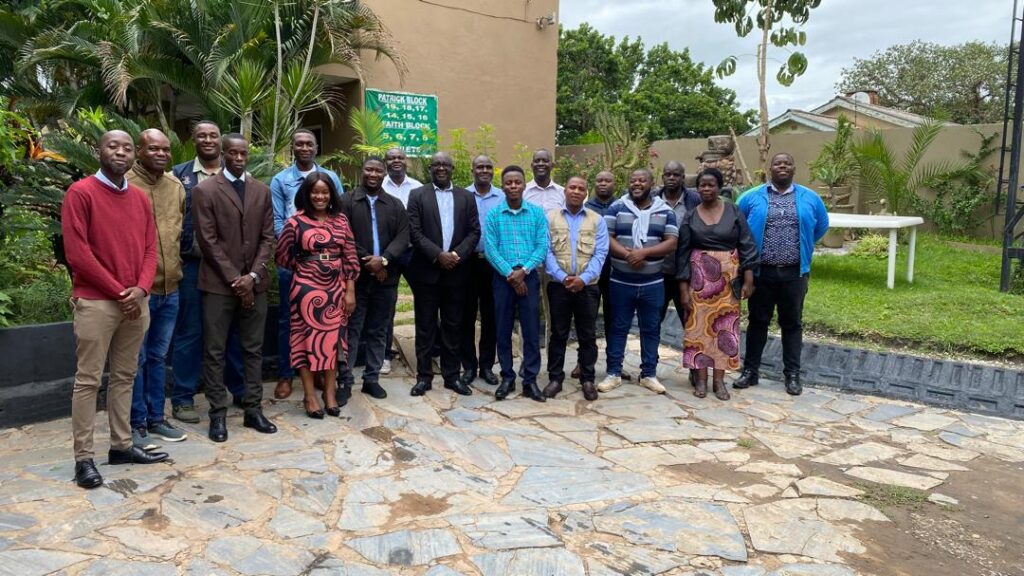
ZNPHI to pilot the Alert Threshold Program for early detection and timely response

? Kabwe, Central Province and Mazabuka, Southern Province The Zambia National Public Health Institute (ZNPHI), the nation’s disease intelligence agency, hosted trainings in Kabwe and Mazabuka, from 6th – 10th January, 2025, on the newly introduced Alert Threshold Program, a groundbreaking initiative aimed at improving early detection and timely response to public health threats. This innovation, which will be piloted in Central and Southern Provinces, will utilise data reported on the electronic Integrated Disease Surveillance and Response (eIDSR) system to automatically calculate thresholds for suspected cases, and directly notify the appropriate district surveillance officers via Email, Text and Telegram application. The training also included a focus on 7-1-7 principles, ensuring districts are equally equipped to initiate early response actions and track progress using the 7-1-7 performance matrix. Speaking during one of the two trainings, Dr Cephas Sialubanje, Director of Strategic Planning and Information Management at ZNPHI, emphasised: “This pilot program lays the foundation for enhancing disease intelligence and responsiveness in Zambia. It underscores the critical role of effective surveillance systems in ensuring timely detection, assessment, and response to health risks.” This initiative marks a significant step toward strengthening Zambia’s public health security and information management. It is also significant to advancing disease intelligence in Zambia. ? Together, let’s make surveillance smarter, faster, and more responsive

ZNPHI to pilot the Alert Threshold Program for early detection and timely response Read More »
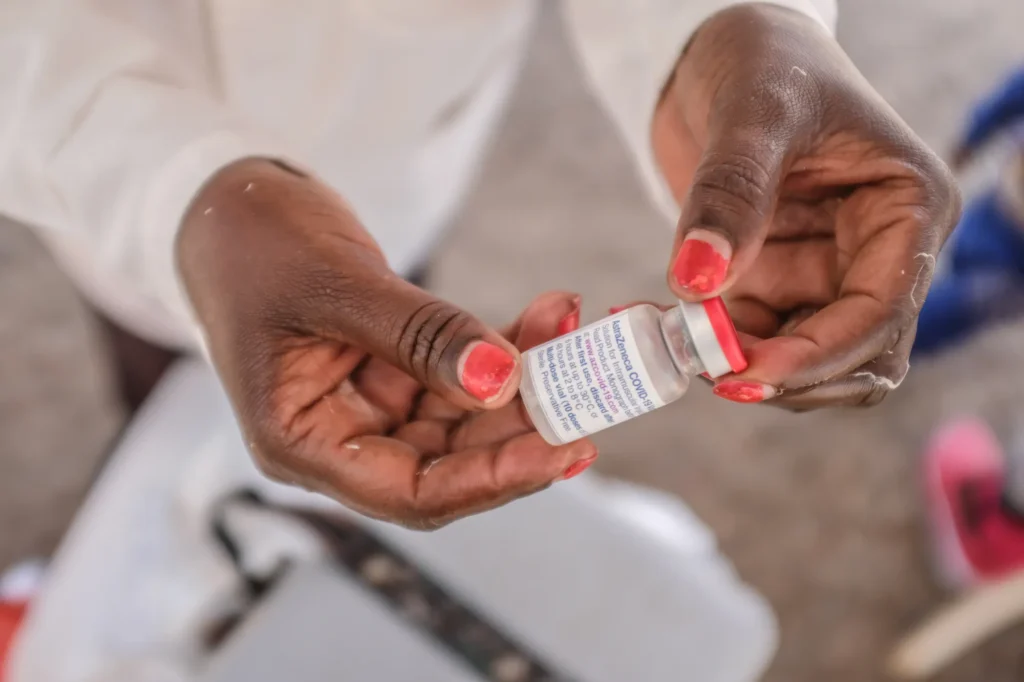
“SPEAK OUT” – ZNPHI on the Declaration of Mpox as a Public Health Emergency of International Concern

On August 14, 2024, the World Health Organization (WHO) declared Mpox a Public Health Emergency of International Concern (PHEIC) in accordance with the International Health Regulations (IHR) (article 12) due to its rapid spread in Africa. This followed the Africa Centre for Disease Control and Prevention (ACDC) declaring it a Public Health Emergency of Continental Security on August 13, 2024. The rapid spread of a new virus strain, clade 1b, along with cross-border transmission to previously unaffected countries, necessitated the declaration of the ongoing Mpox outbreak as a PHEIC. A PHEIC is a formal declaration by WHO of an extraordinary event which is determined to constitute a public health risk to other States through the international spread of disease and to potentially require a coordinated international response.This declaration has significant implications, especially for affected and at-risk countries. It will help mobilise specific response resources, including unlocking access to essential funding, and strategic vaccine stockpiles. Additionally, it will prompt international coordination of risk communication and community engagement (RCCE), surveillance, and epidemic response against Mpox. Previous Mpox OutbreaksMpox, an Orthopoxvirus (similar to viruses that cause small pox), was first detected in humans in 1970 in the Democratic Republic of Congo. It is considered endemic to Central and West Africa. However, in recent years, Mpox cases have steadily increased, spreading to countries. The current PHEIC declaration is the second related to Mpox in two years; it was first declared a PHEIC by WHO from July 2022 to May 2023. During that time, 7,146 suspected cases were reported in 2022, and 14,957 cases in 2023. Zambia Remains on High AlertAs of the current declaration, Mpox has affected at least 12 countries, with over 17,000 suspected cases reported in 2024. Of these, 2,863 have been laboratory confirmed and 517 have resulted in deaths. The vast majority of cases, and about 87% of the deaths have occurred in the Democratic Republic of Congo. Fortunately, Zambia has not reported any confirmed cases of Mpox. Despite this, your disease intelligence agency, Zambia National Public Health Institute (ZNPHI), remains vigilant and on high alert. ZNPHI has activated a robust surveillance system that is actively monitoring potential Mpox cases in communities and healthcare facilities. The system is swiftly identifying and responding to any suspected cases. Additionally, a National Contingency Plan for Mpox has been developed, with orientation of staff and enhanced screening at all points of entry, especially at international borders identified as priorities. The country also has diagnostic capacity at the Zambia National Public Health Reference Laboratory. While we await the WHO’s temporary recommendations, safeguarding Zambia from a potential Mpox outbreak requires collective action. We must maintain ‘high alert’ at all levels of our health system and ensure timely and accurate dissemination of information to inform public health actions. Our geographical proximity to DRC with a very long 2,388 kilometer border stretch through which people freely cross, makes us particularly at high risk For further information or assistance, please visit the Ministry of Health or ZNPHI websites and follow their social media platforms. You can also contact ZNPHI via their information lines at 0974 493553, 0953 898941, or 0964 638726. Alternatively, you can call the toll-free line 909 on MTN and Zamtel networks Further reading

“SPEAK OUT” – ZNPHI on the Declaration of Mpox as a Public Health Emergency of International Concern Read More »

“SPEAK OUT” – The New Public Health Order

The public and stakeholders about whom the New Public Health Order is framed need to know: Coined by the Africa Centre for Disease Control and prevention (Africa CDC), the new public health order is often quoted by countries, Ministries of Health, Institutions and indeed individual technocrats. But what is the new public health order, and what implications does it have on our approach to health security? The Africa Union(AU) Assembly of Heads of State and Government at its 35th Ordinary Session in February 2022 granted Africa CDC operational autonomy. InJuly 2022, AU Assembly, delegating its authority to the AU Executive Council, adopted the revised statute of the Africa CDC. These decisions mean that Africa CDC is now able to handle all its operations and therefore move faster to support any health emergencies; will handle all its administrative, financial, procurement and human resource needs; has authority to declare Public Health Emergency of Continental Security (PHECS); and now has a Committee of Heads of State and Government as the highest decision- making body in its governance. Africa CDC’s vision of a New Public Health Order for Africa constitutes a paradigm shift in Africa’s approach to health security and public health. Briefly, it is hinged on five pillars namely: (1) Strengthened public health institutions at country and continental levels; (2) Strengthened Public Health Workforce; (3) Expanded local manufacturing for health products; (4) Increased domestic resources including financing; and (5) Action-oriented and respectful partnerships based on Africa’s priorities The Africa CDC works with Ministries of health in all member states, and where already established through National Public Health Institutes (NPHI), as is the case for Zambia. According to the Africa CDC the African continent has 23 countries with well-established and functioning NPHI, 19 in the process and 13 not yet decided.  Whether a NPHI is established or not in a given country is not the issue; the question is, how resilient is the emergency preparedness and response mechanism? This issue, in most if not all African countries, requires some form of dedicated team of staff working on these because regular Ministry of Health staff are often overstretched with mundane aspects of providing healthcare services to the public. It does require consistent adjustments to streamline surveillance mechanisms, data systems and continuous revies to have a sense of ongoing disease intelligence functions. The public health workforce is another key pillar often misunderstood. Our medical education system was historically designed to make diagnosis and provide appropriate treatment; and indeed, the infrastructure and health sector establishment accordingly aligned. But present-day emergency threats require a rather different approach. This is why the new public health order appropriately urges countries to invest in training and retraining disease detective’s cadre whose orientation is forward looking to anticipate, rather than respond. This requires dedicated training, equipment and appropriate policy framework to support such operations. In future statements, we shall address and justify local manufacturing, domestic resourcing and respectful partnerships. For now, we emphasize that the new public health order is not an optional choice, it is an imperative. We thank the government of Zambia and the Ministry of Health for the steps so far taken in the right direction. Indeed, His Excellency President Hichilema made the point on 16th July 2022 through the Lusaka Declaration when he called on all African leaders to ensure that they have established and functional Public Health Emergency Operations Centers (PHEOCS). Prof. Roma Chilengi Director General/Health Advisor to the Republican President

“SPEAK OUT” – The New Public Health Order Read More »

“SPEAK OUT” – The ZNPHI says the journey to eliminating cholera in Zambia just began.

As your institute mandated to spearhead public health security, we wish to remind the Zambian public that it is time to enhance the fight against cholera towards its elimination. The fight against cholera requires a multifaceted approach that encompasses prevention, detection, treatment, and control measures. Key to this journey is everyone taking up their responsibility, hence the emphasis on multisectoral approaches. The fight requires all to throw targeted and strong punches. Indeed, the fight against cholera is an ongoing battle that requires sustained efforts from governments, private sector organizations, researchers, academics, communities, and individuals worldwide. Cholera is an ancient disease associated with lack of access to safe drinking water. Failure to provide safe water is nearly always associated with poor sanitation. These factors are really two sides of the same coin and characteristic of “under development”. Unfortunately, our current context in Zambia presents these faces everywhere one looks, especially the urban areas – without exception. Urbanization in our country, and indeed the wider developing world carries with it large populations typically living in high-density unplanned or inadequately planned areas where social services are grossly lacking. The result is always the same: poor housing which is unfit for habitation, lack of safe water supply, poorly managed waste, high population density and often the label “cholera hot spot”. The most affected communities on the other hand, somehow seem unable to understand that their living conditions predispose them to many public health dangers, among which cholera is just one. Despite community engagement activities where health education is applied, the adoption of the social and environmental public health measures remains a huge gap. The wanton behaviour generally oblivious to the reality that basic hygiene is the beginning of all personal, and indeed public health. Common beliefs which result in people dying at home are reminiscent of ancient history. In the 1840s, one of the prominent health theories of the time – the Miasma Theory – suggested that bad smells and bad air, especially at night, led to people contracting diseases like cholera and the Black Death. It is really disturbing that in 2024, affected people of Zambia would attribute cholera in their homes as being due to “Chimpepo” (“bad air”). The reactive approach of bombardment of public places and water sources with intense chlorination, temporary supply of “imported” water by bowsers, forced burying of shallow wells, and in some cases a cholera vaccine is not a sustainable strategy for public health. The Zambia National Public Health Institute (ZNPHI) – your disease intelligence wing – is deeply concerned by the current drop in guard and return to business and politics as usual. The Call by His Excellency the President of the Republic of Zambia Mr Hakainde Hichilema, who is also the Global and SADC Champion for cholera elimination, to transition into medium- and long-term actions requires all Zambians to rally behind, get to work and sustain the cholera fight. The ZNPHI calls on all stakeholders and reminds that a more deliberate effort in significantly moving the agenda on cholera control and elimination must be done at this time acknowledging the support rendered so far. As a country, and individually, we need to make up our minds and work towards preventing cholera NOW! If we do not, we must as well be preparing to again open Heroes Stadium, not for football matches, but for cholera case management! The control and eventual elimination of cholera requires a coordinated approach focused on prevention through water, sanitation, and hygiene (wash) interventions; vaccination campaigns; continuous surveillance and early detection; treatment and case management; health education and community engagement towards social behavioural change; strengthened coordination and collaboration. Addressing the underlying social determinants and vulnerability factors; and supporting research initiatives for the development of new tools, technologies, and strategies for cholera prevention, diagnosis, and treatment. A clarion call is here made publicly that unless serious attention is given to these matters, we risk shutting down the country and economy because there will again be so much cholera – it’s only a matter of time. Sincerely, Prof. Roma Chilengi Director General/Health Advisor to the Republican President

“SPEAK OUT” – The ZNPHI says the journey to eliminating cholera in Zambia just began. Read More »

Scroll to Top